Spanish Style Homes – Timeless Interiors and Modern Design Ideas

Spanish-style homes have a timeless appeal with distinctive exterior and interior design elements. Externally, Spanish homes feature elements such as arches, stucco finishing, and red tile roofing. On the inside, you’ll find exposed beams, wrought iron accents, and colorful patterned tiling. 

While traditional Spanish house designs are still sought after, the classic design has also evolved to fit into the modern world. Modern Spanish-style houses have a more minimalistic design and have moved from dark earthy color palettes into lighter earth tones. However, you’ll still find classic details, including arched doorways, wooden ceiling beams, patterned tiles, and natural materials such as clay, plaster, woven fibers, and iron.

If you’re interested in a classic or contemporary Spanish-style home, you’ve come to the right place. Read on to learn all about modern Spanish-style design trends, key differences between modern and traditional homes, and more!

What Defines a Spanish-Style Home?

Spanish-style homes are inspired by colonial architecture. While most newly built houses have been modernized with updated materials and aesthetics, there are a few key characteristics that remain the same. These unique design characteristics are what define the Spanish-style house. This includes:

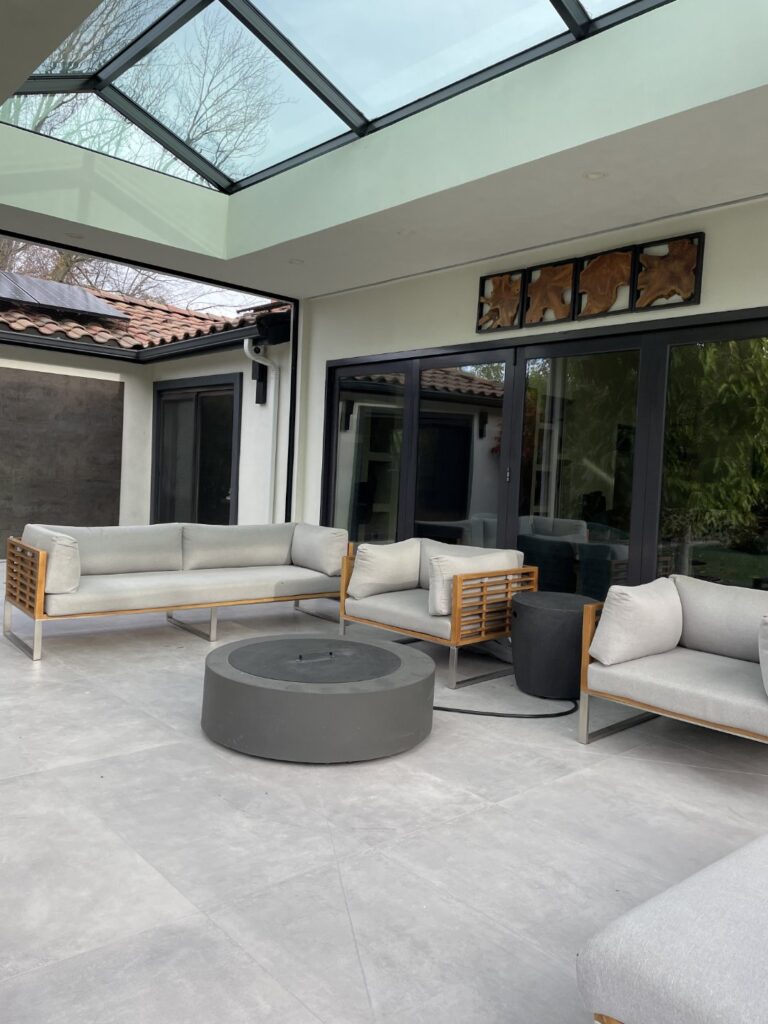
  • Stucco Walls: Stucco is a common exterior material used instead of brick, stone, or siding. It has a white or off-white appearance and is often smooth to the touch.
  • Red Tile Roofing: Spanish homes typically have a low-pitched roof covered in red tile roofing. The most common roofing for these homes is red terracotta barrel tiles. 
  • Arched Doorways & Windows: Arched doorways are featured both inside and outside Spanish houses. It’s also common to have arched gates and entryways to porches.
  • Wrought Iron Accents: Wrought iron is a traditional element in Spanish architecture. It’s used for windows, door hardware, balconies, fences, accent tables, staircase railings, light fixtures, and more.
  • Wooden Beams: Exposed wooden beams are a remnant of historic Spanish colonial construction. Today, leaving wooden beams exposed creates a warm and rustic aesthetic, perfect for Spanish-style interiors.
  • Patterned Tile: Spanish-style tiles include terracotta, ceramic hand-painted, and cement tiles. They often have intricate patterns and are used for entryway floors, staircase steps, kitchen backsplashes, walkways, and fireplace accents.
  • Plaster Fireplaces: Plaster fireplaces complement the natural aesthetic of Spanish interiors. The material is also highly malleable, which is ideal when creating Spanish-style fireplace cornices and mantels.

Hacienda-Style Interiors

A hacienda-style interior is common in a modern Spanish-style house because it highlights functionality and practicality over decoration. Since modern homes are more minimalistic, substituting decorative elements with functional designs is perfect. Here’s an overview of Hacienda-style interiors:

  • Colors: Hacienda-style color palettes include colors such as clay, rust, terracotta, cream, beige, and white. Typical accent colors include teal, dark red, olive green, navy blue, and mustard yellow.
  • Materials: Similar to traditional Spanish-style interiors, Hacienda-style interiors use natural materials such as plaster, stucco, clay, terracotta tiles, iron, and wood. These materials help create a rustic, warm, and inviting aesthetic.
  • Textiles: Typical textiles include handwoven rugs and blankets as well as patterned, embroidered, or textured throw pillows. Linen, cotton, and wool are also common textiles used in Hacienda-style interiors.
  • Furniture: Hacienda-style furniture has a rustic elegance that emphasizes durability. Wood is very common, including solid, carved, and distressed wooden furniture. Wrought iron is also common for furniture handles, legs, and accents.
  • Lighting: Large windows and sheer curtains are utilized to maximize and emphasize the presence of natural light. Common light fixtures include chandeliers and wall sconces made of iron.
  • Layout: Hacienda-style interiors feature high-ceilings and either an open-concept or enclosed layout. Enclosed layouts use open archways to separate spaces and divide rooms. The design also commonly connects comfort with nature through indoor-outdoor living. 

Modern Spanish Interior Design Trends

The following list explores some of the most popular Spanish interior design trends in 2025:


In addition to white, brown, beige, and rust, modern Spanish designs have incorporated colorful tones into the color palette. Some of the trending colors include olive, dusty pink, mustard yellow, and burnt-orange. These colors may be used on the walls and floors, in backsplashes, in furniture, and in wall art.

Textured walls, either for entire rooms or accent walls, are a popular Spanish design trend in 2025. This is accomplished using plaster or stucco, but rather than applying it smoothly, it’s applied to be rough, bumpy, or patterned.

The Mediterranean and Spanish home styles have many similarities. This has led many people to start blending the two styles together within their home interiors. This involves adding touches of turquoise, blue, and/or yellow colors, as well as natural stone accents, and mosaic tiles.

Modern Spanish lighting goes beyond wrought iron, using additional materials such as glass or chrome. There is also added visual interest in a statement lighting piece. For a modern Spanish light fixture, this might look like a classic chandelier shape with modern pendants.

Modern Spanish Interior Design Trends

The following list explores some of the most popular Spanish interior design trends in 2025:

Colors Beyond Neutrals

In addition to white, brown, beige, and rust, modern Spanish designs have incorporated colorful tones into the color palette. Some of the trending colors include olive, dusty pink, mustard yellow, and burnt-orange. These colors may be used on the walls and floors, in backsplashes, in furniture, and in wall art.

Textured Walls

Textured walls, either for entire rooms or accent walls, are a popular Spanish design trend in 2025. This is accomplished using plaster or stucco, but rather than applying it smoothly, it’s applied to be rough, bumpy, or patterned.

Mediterranean Inspiration

The Mediterranean and Spanish home styles have many similarities. This has led many people to start blending the two styles together within their home interiors. This involves adding touches of turquoise, blue, and/or yellow colors, as well as natural stone accents, and mosaic tiles.

Statement Light Fixtures

Modern Spanish lighting goes beyond wrought iron, using additional materials such as glass or chrome. There is also added visual interest in a statement lighting piece. For a modern Spanish light fixture, this might look like a classic chandelier shape with modern pendants.


  • differences here:

    Layout Changes
    While traditional Spanish-style interiors highlight openness through natural lighting and high-ceilings, rooms are enclosed with arched doorways. In contrast, open-concept layouts are more prominent in a modern Spanish-style interior.

  • Color Palette
    Traditional Spanish homes have rich earth tones such as rust and ochre. Modern Spanish-style houses have an expanded color palette, including lighter neutral shades and soft pastels. Common colors include tan, gray, olive, and varying shades of yellow.

  • Design Details
    Spanish modern interiors focus on simplicity and minimalism, while traditional Spanish-style interiors feature intricate patterns and ornate details. For example, Spanish modern furniture has clean straight lines, whereas traditional Spanish furniture has carvings or curves.

How To Get the Look in Your Own Home

Homeowners, renters, and remodelers can all achieve the Spanish-style look in different ways. For example, if a full renovation isn’t feasible, you could start with a change of paint colors, updated furnishings, and new textiles such as rugs and throws. Here are some tips for achieving a Spanish-style home:

  • Replace carpet with tile or hardwood
  • Add wall texture using plaster or stuccoReplace handles and knobs with wrought iron hardware
  • Replace handles and knobs with wrought iron hardware
  • Reupholster furniture with linen or woven fibers
  • Install new wrought iron light fixtures or statement lighting
  • Refinish kitchen cabinets to introduce Spanish home color palettes
  • Add Spanish colonial artwork and décor

While the cost to build a house in San Jose may be higher than purchasing, the benefits of design flexibility, energy efficiency, and long-term resale appeal make building a custom home an attractive option for many homeowners.


Embrace the Allure of Spanish-Style Homes


Modern and traditional Spanish-style homes have a timeless aesthetic that adapts to many environments and lifestyles. From villas to townhouses, Spanish-style architecture can be adopted into any home. While the style has evolved, adapting to new trends, it remains true to its core and relevant across generations. Bring the Spanish-style into your home with the OT Bay Builders. Call us today for a free consultation!

    Up to 10 pictures (*.JPG) / 2 MB each

    OT Bay Builders © 2026 All Rights Reserved. Privacy Policy | Terms of Use